
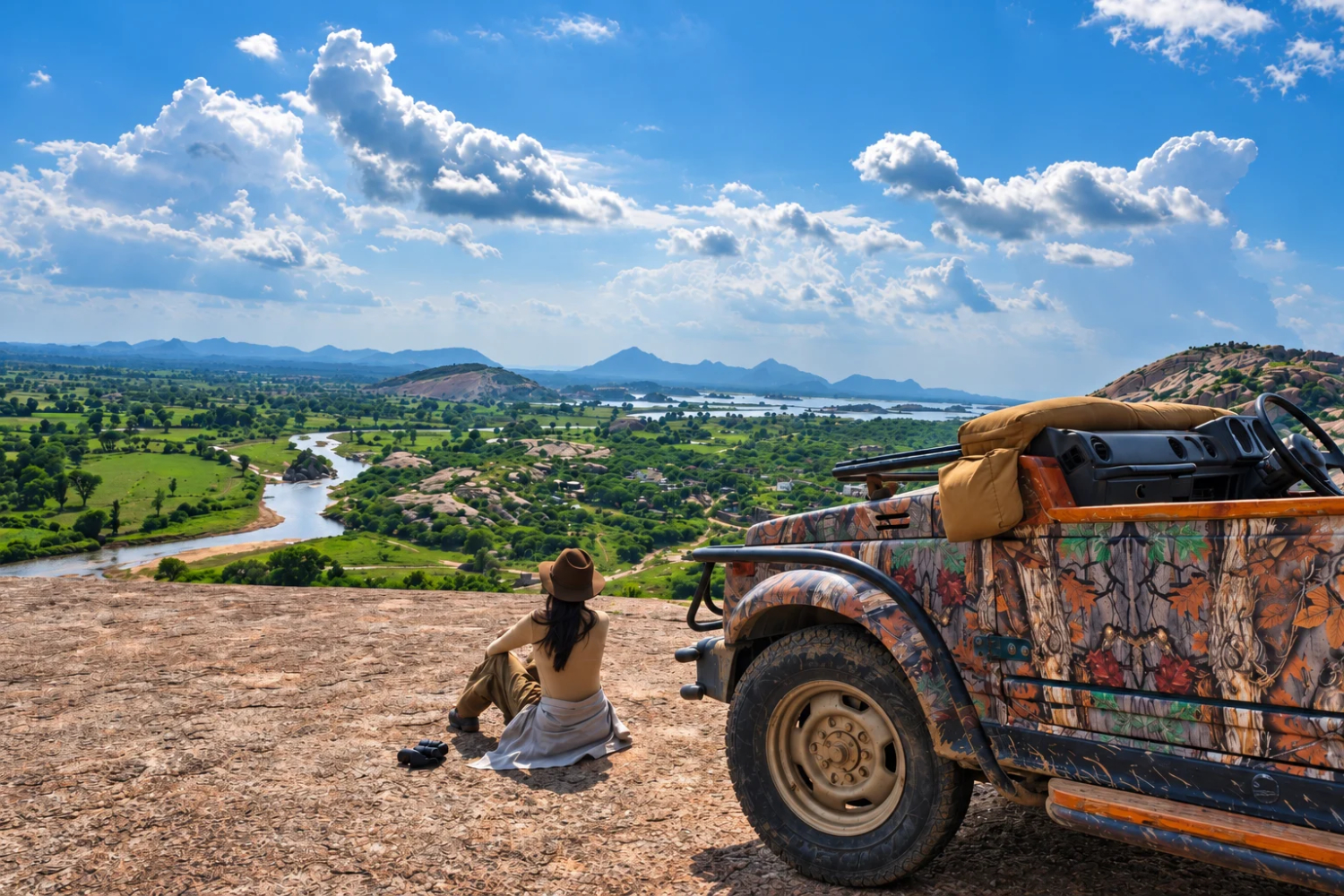
Jawai: wildlife viewing in Rajasthan
Most wildlife holidays in India begin at a park gate and a numbered zone. Jawai, however, begins on a granite hill at sunrise. This region offers the leopard safari jawai on granite rock formations. The setting offers dramatic light for visitors at dawn, truly.
Rabari herders graze their livestock on the plains below. People and big cats have lived alongside one another for generations. Herding and wildlife share the plains today. The contrast between rock and grass shapes the scene. Visitors note the quiet between the big cats and villagers.
That closeness is why safari in Jawai have become one of Rajasthan’s most talked-about wildlife experiences. In practice, you travel in an open 4×4 with local trackers who read the landscape, scan the boulders for leopards, and watch the lakes for marsh crocodiles and, in the cooler months, flamingos, pelicans and bar-headed geese. Along the way, you also see how Rabari herders and wildlife share the same scrubland.
Leopard safari jawai in Jawai
For this reason, the base is Bookmark Resorts, Cheetahgarh, a luxury safari resort in Jawai beside Rotela Lake in Bera.
Here, for example, a day can begin with leopard safari jawai.
Then it unfolds beside the lake or the pool and ends beneath a wide night sky.
In short, this guide covers the safari landscapes and the experiences worth adding.
It also explains how a stay at Cheetahgarh Jawai works and everything you need to plan the trip.
Safari in Jawai: leopard country across granite hills and lakes
There is no zone map to memorise because Leopards roam an open landscape of granite outcrops, scrubland, lakes and a large reservoir, and Jawai safari are arranged through resort programmes and local operators around the areas where the cats are most often seen. Safari in Cheetahgarh Jawai start from the resort, which sits beside Rotela Lake close to granite outcrops where leopards frequently roam.
Four landscapes shape a safari in Jawai.
Rotela Lake and surroundings
Home to Bookmark Resorts, Cheetahgarh, this is the gentlest introduction to Jawai. The lake draws birdlife including flamingos, bar-headed geese and pelicans, along with resident crocodiles, while the nearby granite outcrops are places where leopards frequently roam. Winter is particularly rewarding for migratory birds and waterbirds.
Granite hills and rock formations
The signature terrain of Jawai is a field of ancient Aravalli outcrops: billion-year-old rock formations, caves and boulder piles. However leopards use these rocks to rest through the day and to survey the plains. Rocky areas around Bera and Deogiri, and the surrounding hill tracts, are among the popular places to search.
Jawai Dam (Jawai Bandh) backwaters
The vast reservoir draws a high concentration of marsh crocodiles and both migratory and resident waterbirds. Along the embankment and the surrounding scrubland, you may also come across animals, for example, hyenas, chinkara and free-roaming leopards.
Rabari pastoral lands
Jawai’s ecosystem is defined by coexistence because local Rabari herders graze their livestock among the big cats, and safari tracks pass through these pastoral buffer zones and acacia and babul scrub. This is the part of the journey that explains why Jawai feels so different from a conventional park safari.
What to expect on a Jawai safari
Safari run in open 4×4 vehicles, and experienced local trackers read the landscape, movement and signs of wildlife as they guide you through rocky outcrops, scrubland and open wilderness. Leopards are the headline, but a Jawai safari is about more than one sighting. Look out for nilgai, hyena, crocodiles, chinkara, peafowl and abundant birdlife. As with any wildlife safari, sightings are never guaranteed, which is exactly why good trackers matter.
Stay in Jawai at Bookmark Resorts, Cheetahgarh
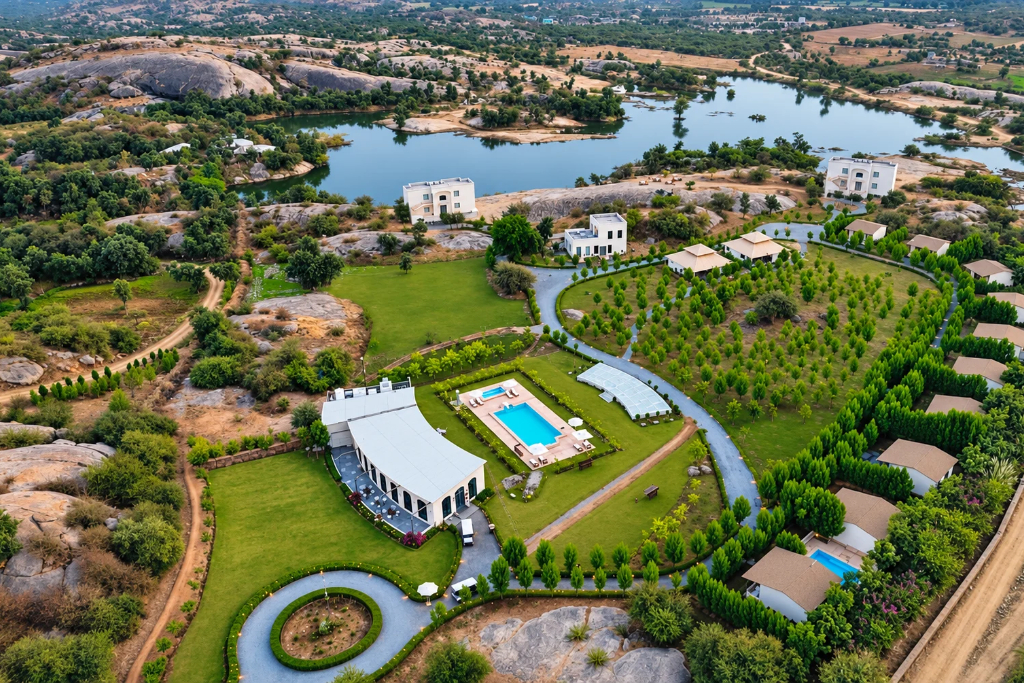
For a Jawai stay that matches the landscape, Bookmark Resorts, Cheetahgarh is a quiet lakeside retreat.
It is shaped by granite hills, open land and the waters of Rotela Lake, and offers leopard safari jawai experiences.
If you are weighing up 5-star hotels in Jawai, or reading about five-star resorts in Jawai, a few simple questions help. How close is the leopard country? Is the setting memorable once the safari ends? Does the resort offer real experiences, not only rooms? These are the questions for many. However, Cheetahgarh answers all three with a lakeside location, a resort-arranged safari and a long list of experiences, from lakeside breakfasts to stargazing.
A lakeside setting between adventures
The lake is the quiet centre of the stay. After a morning safari, you return to still water, wide skies and thoughtful comfort. For current room categories, rates and availability, see the Bookmark Resorts, Cheetahgarh property page.
Amenities
- Outdoor swimming pool. After a dawn safari, an easy place to cool down and spend an unhurried afternoon.
- Spa and wellness. Restorative treatments to slow the pace after an early safari or a day across Jawai’s rocky terrain.
- Gymnasium. A place to keep up your routine on a longer stay.
Dining shaped by the landscape
Waterside Grill is the open-air dining venue at the property, known for wood-fired pizzas, grills and evenings beside the lake. Beyond it, dining takes its cue from the surroundings because here you will find private outdoor dining, a camping evening with a barbecue built around conversation, fire and freshly prepared food, a romantic sunset picnic, and the Rajasthani-themed dinner. A stay at Cheetahgarh Jawai means that even dinner feels like part of the safari.
Frequently asked questions about safari in Jawai
Q. What is the best time for Jawai safari?
A. October to March offers pleasant weather. However, April to June can be extremely hot, although wildlife activity around water sources may still make a safari rewarding. Early morning and late afternoon are the best times of day.
Q. How long does a safari in Jawai last?
A. A typical safari lasts 2.5 to 3 hours. Morning sessions run roughly 05:00 to 09:00 and evening sessions 16:00 to 20:00, adjusted for season and daylight. Full-day options are also available.
Q. Which animals can I see on safari in Cheetahgarh Jawai?
A. Leopards are the main draw. However, you may also see other animals, for example, nilgai, hyenas, crocodiles, chinkara, peafowl and many bird species, with migratory birds most rewarding in winter. Sightings are never guaranteed, but experienced local trackers improve your chances.
Q. How is a Jawai safari different from Ranthambore?
A. Ranthambore is a national park with ten numbered safari zones and is known for tigers. Jawai is an open landscape of granite hills, lakes and pastoral land where leopards are the star; safari use open 4×4 vehicles with local trackers, and the Rabari community lives alongside the wildlife.
Q. Where can I stay in Jawai for a luxury safari experience?
A. If you are comparing five star hotels in Jawai, consider Bookmark Resorts, Cheetahgarh, a luxury safari resort beside Rotela Lake with an outdoor swimming pool, spa, gymnasium, Waterside Grill and a full programme of experiences.
Q. How far is Cheetahgarh from the nearest airport and railway station?
A. Maharana Pratap Airport in Udaipur is 150 km away, and Jodhpur Airport is 167 km away. Jawai Bandh Railway Station is 15 km away, and Falna Railway Station is 31 km away.
Book your Jawai safari and stay at Cheetahgarh
Jawai rewards travellers who slow down. A leopard on a granite ridge at first light, a quiet breakfast beside the lake, a village walk with the Rabari community, and a night sky free of city glow add up to something quite different from a standard park safari.
Whether you are planning yo